Move Over Mona Lisa:
Reimagining What We Read, Look at, and Learn.
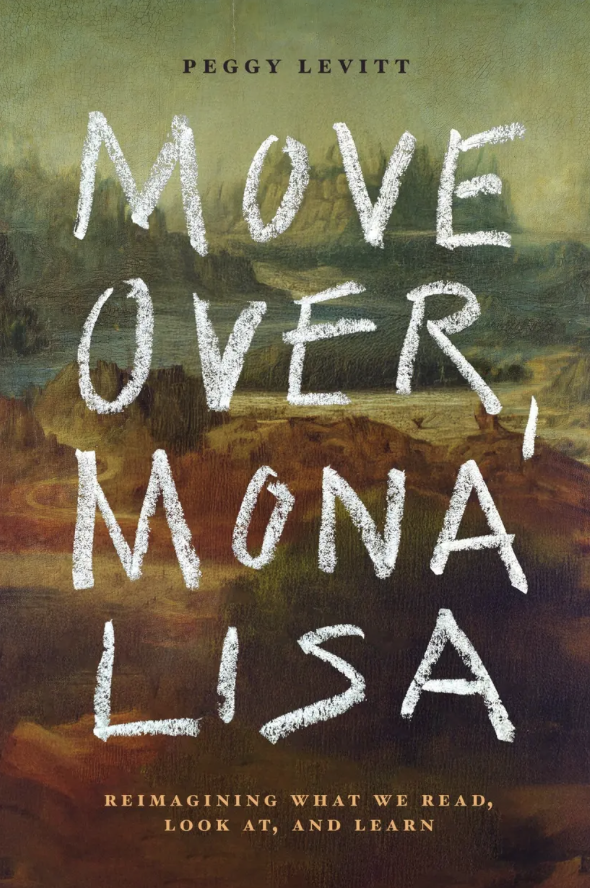
New book out from Stanford Press
Calls to include a wider range of art, literature, and ideas in the world’s classrooms, libraries, and museums are loud and clear. If so many agree that reforms are needed, why is change so slow?
The answer is the inequality pipeline—the multiple obstacles that ideas and art need to overcome to circulate globally. Most strategies to disrupt the pipeline only increase inclusivity, without fundamentally challenging institutional hierarchies. Move Over, Mona Lisa reveals, through conversations with creatives, thinkers, and professionals working in the cultural and academic worlds in Argentina, Lebanon, and South Korea, that another approach to combatting global cultural and intellectual inequality is underway.
Like-minded actors outside of traditional cultural centers are creating new nodes of power, and new pathways which connect them, that allow art, books, and ideas to, “travel from Buenos Aires to Mexico City without having to pass through Madrid.” They are circumventing traditional powerbrokers and boldly reconfiguring the cultural and intellectual order. The book begins where art and literature are first created; then takes us to where they get discovered, circulated, exhibited, and acquired; and concludes where they are researched, published about, and taught. Along the way, we meet visionary artists, out-of-the box writers, committed activists, and teachers striving to define what it means to train truly global citizens. We also discover how the culture and history of the cities they work from influences what they do.
Read the first chapter.
BOOK TALKS
Boston Public Library, October 27th, 6-7:30 pm. In-person. Registration required.
REVIEWS
“Beyond the Canon—How Cultural Authority Is Made,” by Julie Trébault. The Arts Fuse. 7.7.26.
“Move Over, Mona Lisa,” by Isaac Randel. Forward Magazine. July/August 2026.
OP-EDS, INTERVIEWS, & LETTERS TO THE EDITOR
“How do we actually make museums more diverse?” Interview with Peggy Levitt by Eric Johnson on the Call ‘Em Like MUSEUM podcast. 10.6.26
“Works like ‘The Odyssey’ leave a barren landscape for other cultures’ authors,” by Peggy Levitt. The Boston Globe. 8.4.26
“Creating equitable worlds.” Interview with Peggy Levitt by Stacey Schmeidel. The Wellesley College website. 6.25.26

